|
Information regarding participation in the travel/expedition Ruta Quetzal-BBVA 2001 scholarships granted by the Spanish financial group BBVA.
 Versión española
1. What is the Ruta Quetzal scholarship?
 Following H.M. the King of Spain's suggestion, this program was created in 1979, with the goal of teaching 16 and 17 year old students in all the Spanish speaking countries, including Brazil and Portugal, the foundations of the Iberian-American commonwealth of nations.
The Ruta Quetzal BBVA is a combination of studies and adventure. The journey offers a wide program of academic activities, including an academic course designed by the Complutense University of Madrid.
The scholarship, valued at $ 9,000, covers the return flight expenses from New York, Miami or Montreal, as well as the journey of study and the expedition through Spain, Ecuador and Peru.
La Ruta Quetzal 2001 starts in mid-July and is completed in mid-August.
Students from 43 countries will participate in the 2001 Ruta Quetzal.
For the Ruta Quetzal 2001 there are four scholarships that will go to the states of NY, Washington, D.C., Texas and California.
2. What does the academic program include? 
During the stay in Ecuador and Peru, the curriculum of the traveling classroom, by means of seminars, workshops, and lectures, will include a study of the most ancient cultures of Ecuador (Valdivia, Machalilla and Chorrera), the expedition of Antonio Ulloa and Jorge Juan, and the pre-Columbian cultures in their archeological sites. During their stay in Spain, as it has been traditionally done, the guest professors of the Ruta will give lectures on the art, history, and culture of Spain.
Ruta Quetzal participants will be introduced to an advanced program on Internet browsing, sponsored by Uno-e Bank, for the first time this year. All members of the expedition will have an opportunity to familiarize themselves with this tool.
As in previous years, TVE (Spanish Public Television) and Discovery Channel will accompany the members of the expedition in Spain and South America and prepare several programs that will be broadcast by these stations.
3. What will the two stages of the study-journey entail?
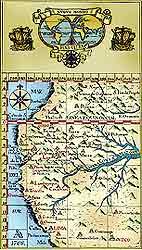 América:
This year the 2001 Ruta Quetzal has the distinction of starting on American soil. The city of Quito will be the first meeting point for all the members of the expedition.
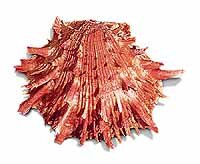 From Quito, the expedition will travel to two large active volcanoes, Pichincha and Cotopaxi and then travel to the National Park of Machalilla, located on the coast, where students will study the Spondylus Princeps oyster. The oyster is the symbol chosen for this year's expedition representing the integration and convergence between the two countries in the Americas that the Ruta Quetzal expedition will visit this year: Peru and Ecuador.
The expedition continues on the Pan-American Highway to the Tumbas Reales del Señor de Sipán, an archeological site of the Moche culture located in the city of Loja. The expedition concludes in Peru, at the national park of Podocarpus.
Spain:
Upon their arrival in Spain, the Ruta Quetzal participants will be received by the King and Queen of Spain. The expedition then travels to the Comarca de la Vera, visiting Yuste and Trujillo, birthplace of Pizarro and Orellana. Subsequently, they will travel to Castile and Leon, where they will learn about the importance of the Caballeros Santiaguistas (knights of the order of Santiago) in the Americas. They will also visit Toledo, Cuenca, Segóbrigo, and the royal palace of La Granja.
The expedition concludes with the closing ceremony at the Royal Academy of the Spanish Language where the participants will be awarded diplomas granted by the Complutense University of Madrid.
4. What are the requirements for participation?
-
Personal:
- Born either in 1984 or 1985.
- Advanced proficiency in Spanish in order to be able to participate in the academic aspects of the expedition. (Minimum Spanish, Level 4)
- Excellent academic record. (GPA: 90+)
- Outstanding student with leadership qualities.
- Must not have participated in previous editions.
- His/her family's moral support.
- With skills and stamina in camping and trekking and willingness to participate in an expedition which will mostly take place outdoors.
-
Submission of original works:
-
In order to participate in this competition, the student must produce an original project on any topic of interest relating to the Americas or Spain which will be submitted to the Education Advisor in each State. This year five different topics are suggested:
- The Spondylus (mullu), exchange coin in pre-Columbian civilizations.
- The discovery of quinine: Secret of the pre-Columbian natives.
- The Order of Santiago in the Americas.
- Iberian-American literature in the XX century.
- The Two Year Development Plan in the Peru-Ecuador Border Region.
-
The works can be historical, literary (verse or prose), artistic (painting, sculpture) or musical according to the following rules:
- The artistic works can be carried out in any artistic technique or material. The finished work will be no larger than 16x20 inches in size and the sculptures no larger than 16 inches tall. Fragile materials, e.g., glass, paper thin woods, etc. shall be avoided.
- The musical works must be original compositions for any musical instrument. The composition must be recorded on audio cassette and not be longer than five minutes.
-
Projects carried out in groups will not be accepted; only works by the individual applicant will be accepted. Each contestant will submit one work.
-
In this journey of study, In search of the Spondylus: The Red Gold of the Inca, other Iberian-American and European students, selected in their own countries, will participate.
- All the works submitted by the selected participants may be published, exhibited, or used for other purposes deemed suitable for their cultural interest. These works will be the property of the organization and will not be returned to their authors.
5. What selection criteria will be used to select the scholarship recipients?
The following criteria will be used in determining the recipients of the 2001 Ruta Quetzal - BBVA scholarships.
- One applicant will be accepted per school district.
-
Each applicant must submit the following documentation:
- A completed application form with all the candidate information requested.
- A high school transcript that includes the applicant's class ranking.
- A letter of recommendation from the applicant's Spanish teacher.
- Document certifying applicant's birth date, e.g., passport, copy of driver's license, birth certificate, etc.
- Written consent of parent or guardian.
- A 200-300 word letter written by the student in Spanish in which he/she explains the reasons for applying for the 2001 Ruta Quetzal-BBVA program and why he/she should be selected for the program.
- The project or original work described in 4.II.
- A 5-10 minute oral interview recorded on audio cassette where the student demonstrates his/her advanced proficiency in Spanish.
The applicant may also provide copies of certificates, awards, and other honors received. In addition, a copy of any research project on any topic and/or original literary work carried out by the student during his/her studies may also be submitted.
Any other documentation that the student considers relevant to the application may also be included.
Recommendations:
- It is indispensable that the selected student currently has a valid passport or is able to get one by April 6th, 2001.
- The selected student should decide, together with his/her parents, what action to take in regarding the recommendations of the enclosed "MEDICAL NOTE". It is essential that all the documentation be sent to the Spanish Consultant, based at the State Department of Education of each of the participating states, within the periods specified in the following section.
6. What is the timeline for the process of selection?
- The Spanish Consultant of the Spanish Ministry of Education based at the State Department of Education of each of the participating states, will provide all the necessary information regarding the Ruta Quetzal-BBVA scholarship to the school districts before March 17, 2001. All questions regarding the student requirements should be directed to the Education Advisor in each State.
- After a process of selecting a district student applicant, school districts will submit the completed application no later than March 24, 2001 to the Education Advisor in each state. After conducting a thorough selection committee review of all applications, Spain's Ministry of Education will announce the decision to the participants on or before April 3, 2001. The selected student will submit all documentation required by the 2001 Ruta Quetzal-BBVA journey of study to the Spanish Consultant before April 11, 2001.
Ruta Quetzal BBVA 2001
Images obtained from www.rutaquetzal.com
|